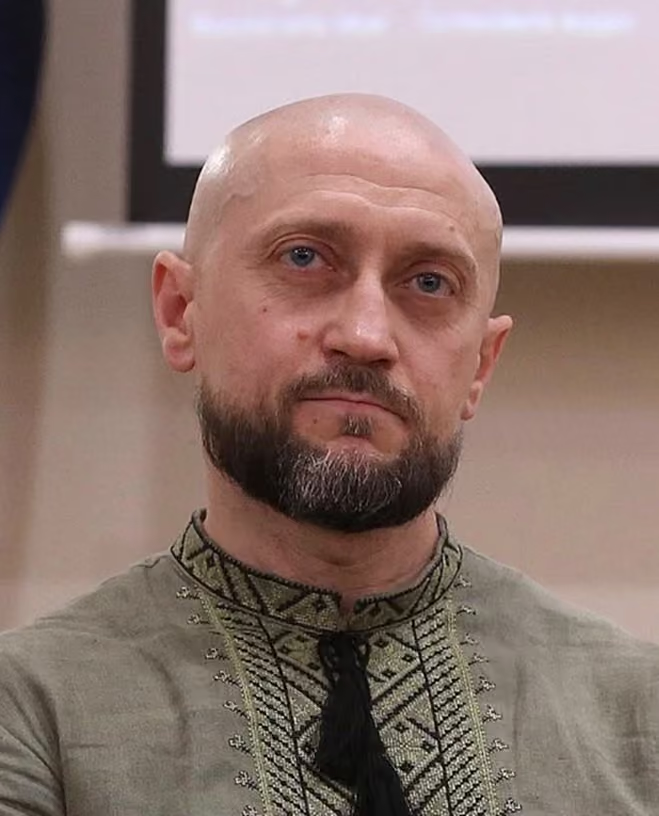
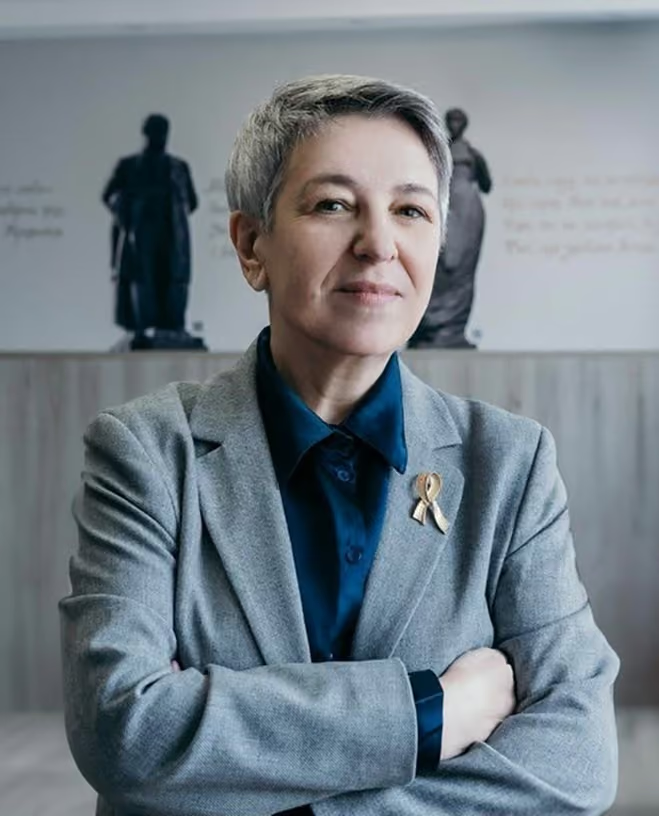
Andrii Zelinskyi
Clergy member of the Ukrainian Greek Catholic Church, co-founder of the Ukrainian Leadership Academy, military chaplain, and author
A Ukrainian philosophy of life. Those who formulated and signed the Manifesto — and the text they put their names to.
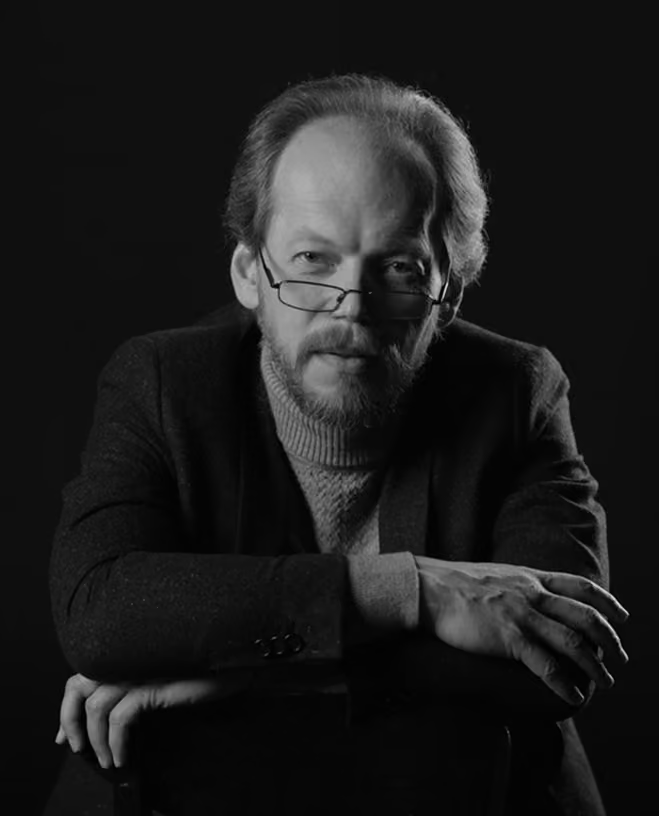
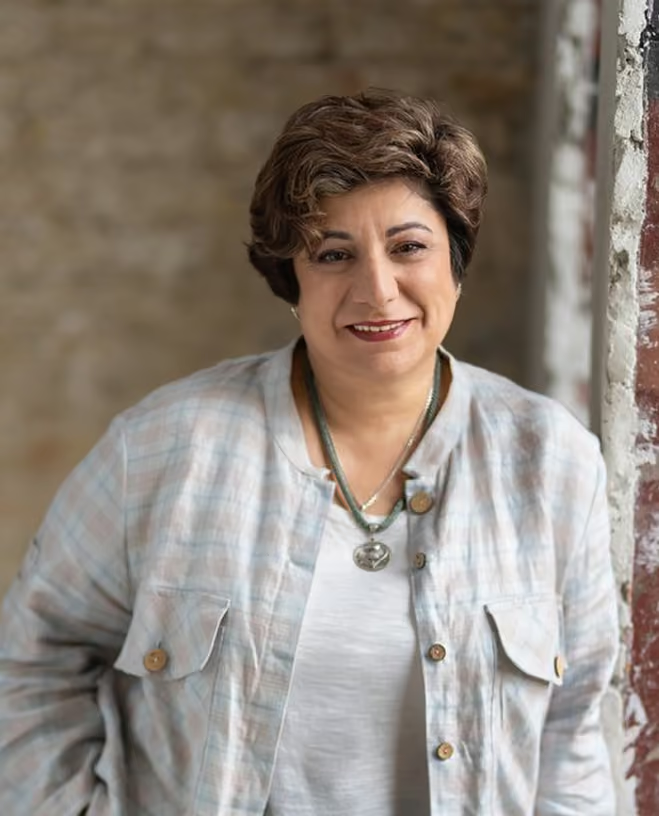
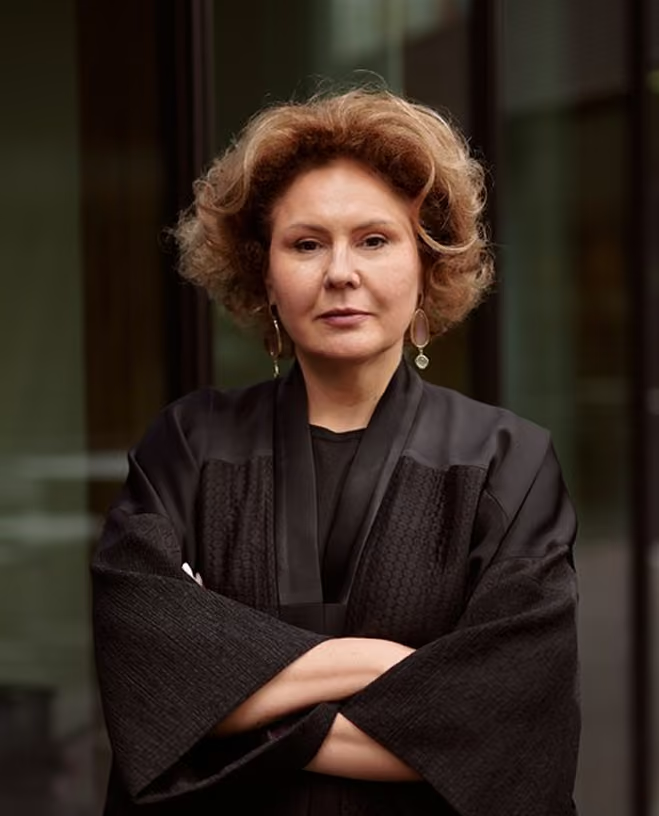
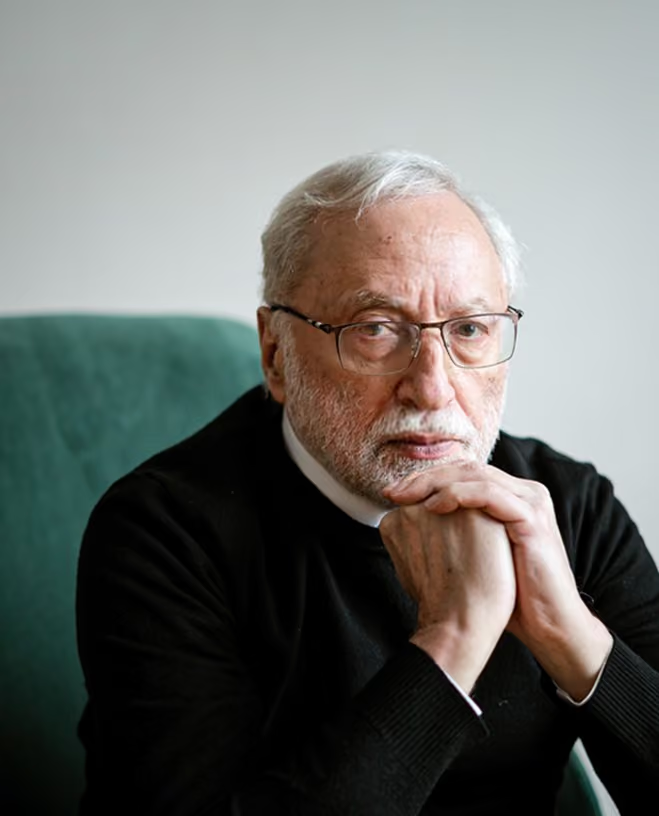
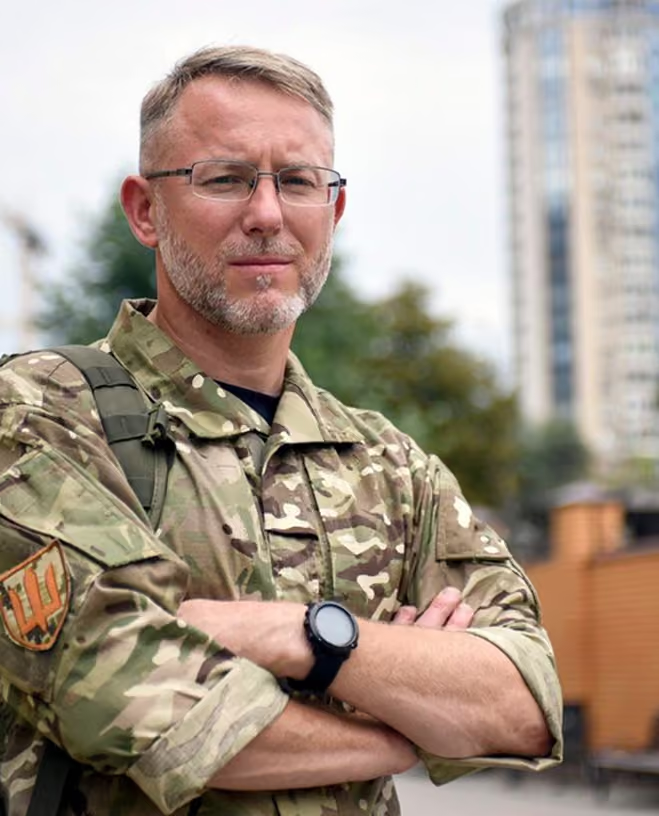
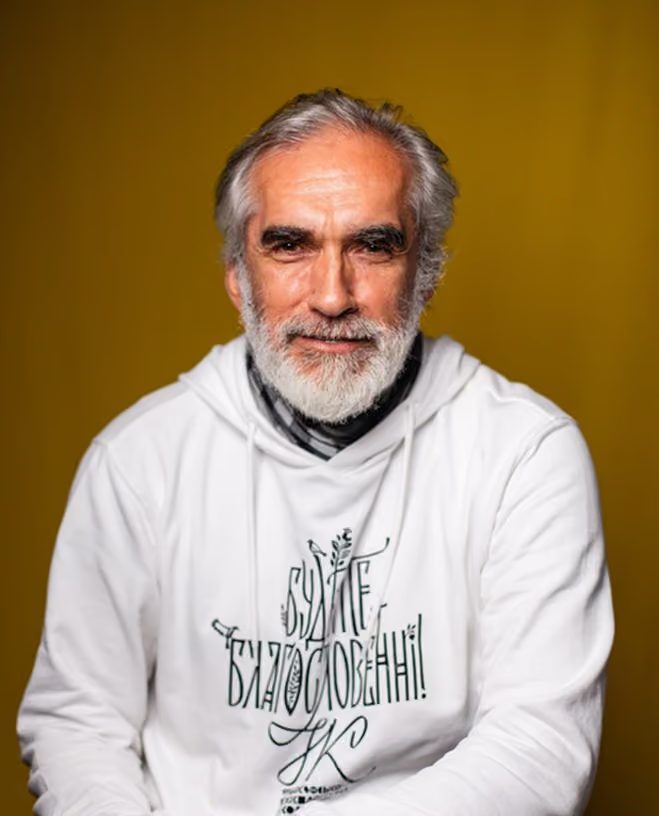
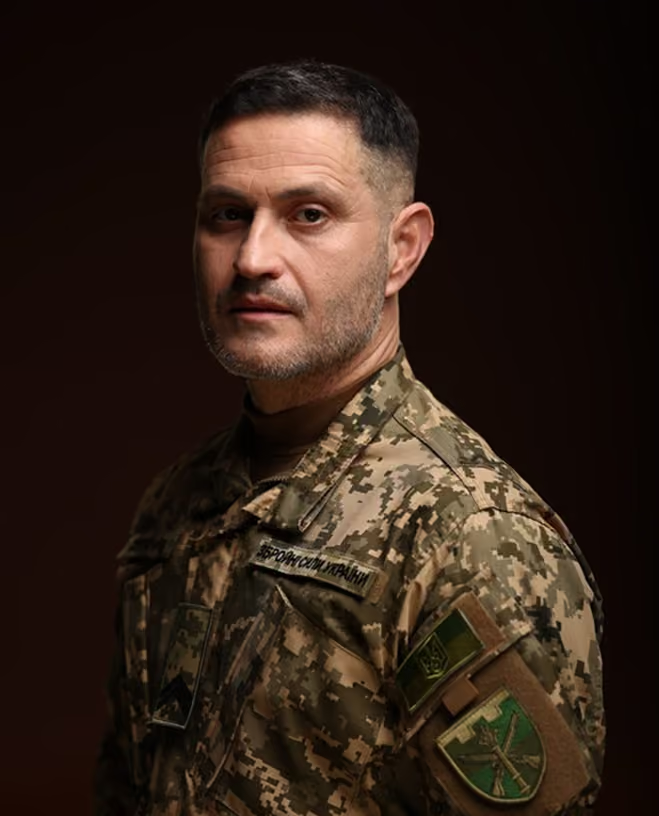
“Through the visible, discern the invisible”
The world has entered an age in which familiar points of reference are losing their force.
Institutions that once offered predictability are faltering; the model of endless growth and guaranteed security no longer holds; absolute security is no longer a precondition for life and action. In such a world, those who endure are those with the resilience to absorb the blow, read reality wisely, preserve their integrity, and turn meaning into action.
Ukraine carries this experience. For centuries, we have lived at the threshold—between threat and life, chaos and order, memory and the future—and we have not disappeared. What enables us to endure, support one another, and create even under pressure is neither chance nor luck. It is a Ukrainian philosophy of life, forged over millennia, and a practical methodology for engaging with reality. We call it sophiynity.
Sophiynity is the ability to perceive reality with both reason and heart: to discern invisible meanings in visible events, align decisions with values, and embody understanding in responsible action.
Sophiynity helps unite tradition and innovation, freedom and responsibility, adaptability and the capacity to resist, reason and heart, strength and wisdom.
The concept grows from a thousand-year Ukrainian cultural experience that brings together pre-Christian understandings of the life force, the classical tradition of Sophia—Divine Wisdom, and practices of self-organization across different historical eras. Sophiynity is not reinvented; it is brought into the present through social practices.
We, the signatories to this Manifesto, do not invent sophiynity. We recognize it, name it, and accept responsibility for carrying it forward.
“It is an encounter, on equal terms, between two abysses: the human heart and the Universe”
It need not be invented—it must be discerned and rediscovered. It runs through our entire history as a living continuum of social experience, and this continuity gives us steadiness and grounding.
It compels no one and belongs to no political party. It is a Ukrainian philosophy of life, open to everyone who practices it.
A full and genuine encounter with reality is possible when a person reads the world not only with the mind, but also with the heart. It is an encounter, on equal terms, between two abysses: the human heart and the Universe.
Love of life gives rise to the strength to defend it, while lived experience becomes not a burden, but a school of life.
It teaches us not to choose between opposites, but to bring them together into a whole: tradition and innovation, heart and reason, the individual and the community, the past and the future.
As in the idea embodied in the image of the Oranta of Kyiv, at the heart of wisdom always stands the human person—with their dignity and calling. For us, dignity is not a reward, but a starting point.
Wisdom builds her house—and that house may be a person, a community, or an institution grounded in virtue. Sophiynity links the individual, the community, the institution, and the state. We cultivate horizontal bonds, self-organization, and mutual responsibility, while also fostering vertical bonds as a necessary form of joint action between society and the state.
The will to live sustains resilience, active optimism, and the capacity to create despite threat. The strength to fight translates the value of freedom into resistance, self-organization, and mutual aid. The wisdom to learn enables us to interpret experience quickly, generate new solutions, change our ways of acting, and avoid repeating mistakes.
It speaks to the world and does not belong to us alone. We offer it not as a museum piece, but as the living experience of a people—an experience needed by all who seek grounding in times of uncertainty.
It is not a religion or denomination—though everyone is free to imbue it with their own faith.
It is not a state ideology imposed from above.
It is not a beautiful slogan or a souvenir; it is grounded in action, not words.
It is not passive waiting: for us, “everything will be all right” is a call to service, not merely a hope.
Sophiynity exists only in action. Therefore, we choose:
to act despite everything and not postpone life until later;
to cultivate living models of resilience—creativity, horizontal bonds, and new meanings—because our strength lies in unity;
to preserve memory and hope, to celebrate, and to rejoice in life even in dark times;
to practice beauty and keep learning—even in a shelter;
to ask ourselves questions of sophiynity: Who am I? Why are we together? What is the meaning? What is our future?
to pass this experience on—to children, communities, and the world.
We address the world from the standpoint of our own philosophy. We are not returning to the Europe of the past—we offer a point of departure for a shared future. Chaos in the world will grow, and the ability to withstand it without losing oneself will be needed by many. We are ready to share this capacity.
This is our Sophia—our wonder and glory, as it was said a thousand years ago. We need not return anywhere or prove anything. It is enough to know who we are, where we come from, and never forget it.

By signing this Manifesto, we choose to practice and uphold sophiynity—through our words, deeds, and personal example.